The most useful boat accessories are the ones that solve a problem you notice on almost every trip. For one boat, that may be uncomfortable seating. For another, it may be difficult boarding, poor rod storage, limited visibility at night, or a paddle that has no secure place on deck. You do not need all ten upgrades below. Start with the problem that affects your boat most often, then check fit before buying.
This is a guide to optional comfort, access, fishing, control, visibility, and storage upgrades. It is not a complete safety-equipment checklist. U.S. boaters should review the U.S. Coast Guard boating requirements and applicable state or local rules separately.
Quick Comparison: Which Boat Accessory Solves Your Problem?
| If your main problem is... | Start with... | Check before buying |
|---|---|---|
| Uncomfortable or worn seating | Replacement boat seats | Seat size, mounting pattern, clearance |
| Poor seat height or limited movement | Pedestal, slider, or swivel base | Height range, interfaces, deck support |
| Drinks and bottles sliding around | Boat cup holders | Container size, mounting method, drainage |
| Difficult boarding from the water | Boat ladder | Mounting surface, water reach, handhold |
| No secure handhold near a step or entry point | Grab handle | Placement, backing access, fasteners |
| Rods lying on the deck or occupying both hands | Fishing rod holders | Use case, rail size, rod-butt fit |
| A worn wheel or an unsuitable helm layout | Boat steering wheel | Shaft compatibility, diameter, clearance |
| Old or unsuitable navigation fixtures | Bow or anchor lights | Vessel requirements, position, wiring |
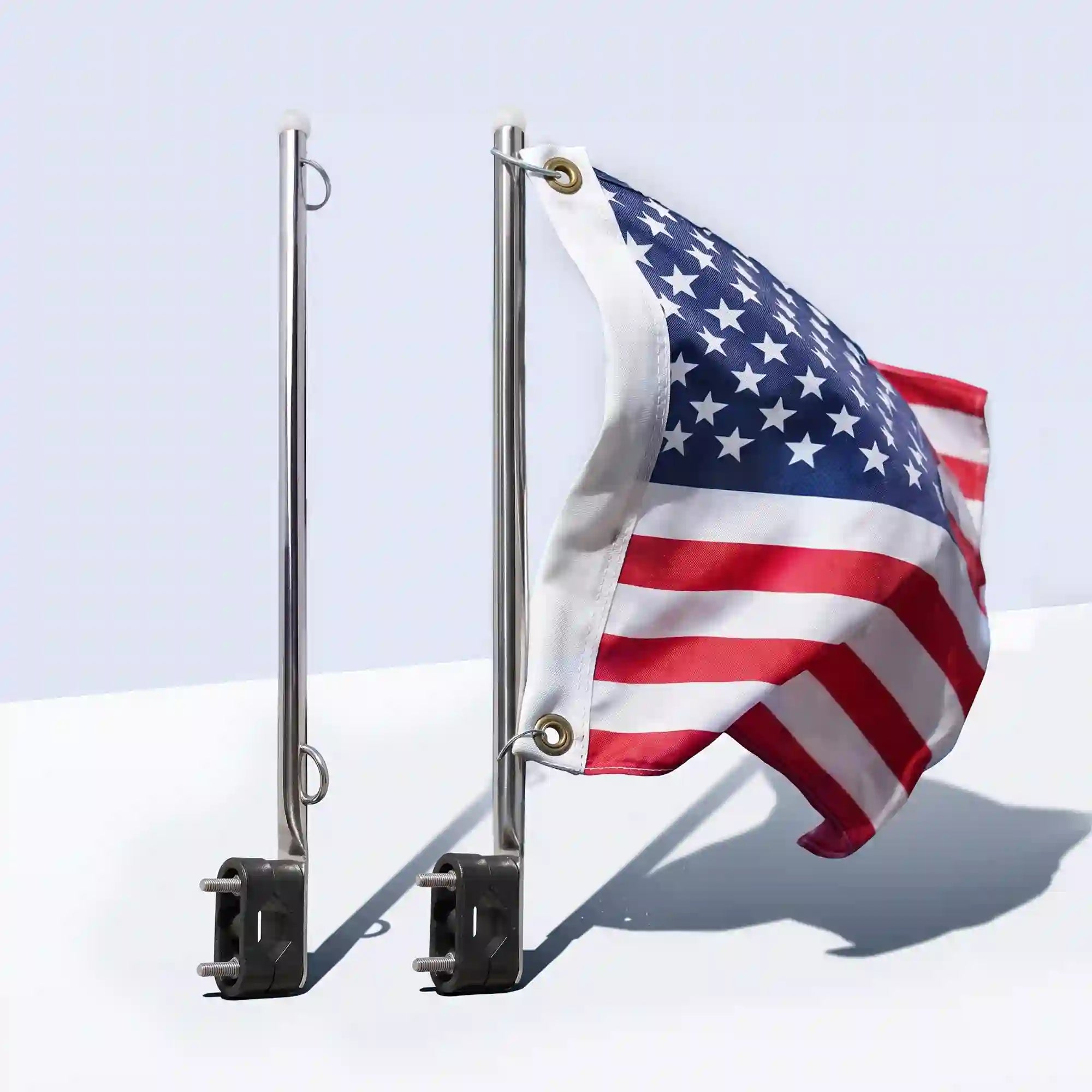
| No suitable place to display a boat flag | Clamp-on flag pole | Rail size, flag size, movement clearance |
| A paddle or oar system that is poorly stored | Paddle holder or oarlock socket | Storage versus rowing use, mounting location |
You can also browse the full Marinexplore boat accessories collection after identifying the problem you want to solve.
How to Prioritize Boat Upgrades
Choose upgrades by repeated friction, not by appearance alone. An accessory is more likely to be worth buying when it improves something you do on most trips and fits the boat without creating a new obstruction or installation problem.
- Confirm the use case. Decide whether the accessory is for cruising, fishing, boarding, night operation, rowing, or storage.
- Measure the installation point. Check the rail, mounting footprint, hole pattern, clearance, and space behind or below the surface.
- Check compatibility. Terms such as universal, standard, and marine do not replace actual dimensions or product instructions.
- Separate upgrades from required equipment. Optional accessories do not replace legally required safety gear or correct installation.

1. Boat Seats: Start With Fit and Support
Boat seats are a sensible first upgrade when the existing seat is damaged, uncomfortable, difficult to fold, or poorly suited to the way the boat is used. A fishing position, helm position, and passenger bench do not need the same seat shape or movement.
Before ordering, measure the available width and depth, identify the mounting pattern, and simulate how the seat will open, rotate, or fold. Check nearby controls, gunwales, storage lids, and walking space. If the seat will be mounted to an existing pedestal, confirm both interfaces rather than assuming they are interchangeable.
The boat seat collection includes folding fishing seats, bass boat seats, bench seating, and other configurations for different layouts.
2. Seat Pedestals and Swivel Bases: Fix Position Before Adding Features
A pedestal or swivel upgrade is useful when the seat itself is acceptable but its height, reach, rotation, or removal method is not. Adjustable pedestals can help different operators reach the helm, while sliders and swivel bases change fore-aft position or direction.
Measure the required seated height and available travel. Then confirm the seat interface, pedestal post or pin system, base footprint, fastener access, and deck structure. A part can match the seat but still be wrong for the existing base or mounting surface. Installation strength depends on the complete system, not only the pedestal.
Compare adjustable pedestals, slide mounts, swivel bases, and quick-disconnect options in the boat seat pedestal collection.
3. Boat Cup Holders: Choose the Mount Before the Finish
Cup holders are worth upgrading when bottles and tumblers do not fit securely or when the existing holder collects water. The useful decision is not simply stainless steel versus plastic. It is where the holder can be placed without interfering with passengers, seat movement, controls, or storage lids.
Flush-mount holders need a suitable cutout and space below the surface. Wall-mounted and folding designs need a stable vertical surface. Pontoon holders may sit beside or between seating, while LED inserts require a compatible power plan. Measure the containers you actually carry and check drainage before installation.
See wall-mounted, pontoon, folding, stainless steel, and LED options in the boat cup holder collection.
4. Boarding Ladders: Make Reboarding Easier for the Actual User
A boat ladder is a high-priority upgrade when passengers regularly swim, dive, or board from a dock and the current setup is difficult to use. The best ladder depends on the freeboard, transom or platform layout, storage position, and the person using it.
Check how far the steps extend into the water, whether a passenger has a secure handhold, and whether the ladder can deploy without hitting the motor, trim tabs, platform hardware, or boarding path. Also inspect the mounting structure and follow the product instructions for backing, sealing, and fasteners. Step count alone does not determine whether a ladder will work on a particular boat.
Compare telescoping, folding, platform, pontoon, removable, and dive configurations in the boat ladder collection.
5. Grab Handles: Add a Handhold Where Movement Is Awkward
A grab handle can improve movement near a boarding ladder, step, bow access point, or passenger transition area. It should be placed where a person naturally reaches while keeping hands away from hinges, controls, and pinch points.
The installation matters more than the handle length alone. Confirm that the mounting surface can support the expected use and that there is access for suitable hardware or backing. Do not rely on a windshield frame, trim piece, or another component that was not designed as a handhold.
Marinexplore currently offers active 9-inch and 12-inch options in the boat grab handle collection.

6. Fishing Rod Holders: Match the Holder to the Job
Fishing rod holders solve different problems depending on whether the goal is storage, temporary transport, hands-free fishing, or a specific trolling setup. A multi-tube wall rack, clamp-on rail holder, and adjustable single holder should not be treated as interchangeable.
Measure the rail or mounting area, the widest rod butt, usable tube depth, and reel clearance. Decide how often the angle needs to change and whether adjustment requires tools. For rail mounts, the stated clamp range must match the outside diameter at the exact installation point.
The fishing rod holder collection includes active wall-mounted, clamp-on, adjustable, and outrigger-style options.
7. Boat Steering Wheels: Confirm the Helm Interface First
A replacement steering wheel can refresh a worn helm and change hand position, but it should be selected by compatibility and clearance before style. A larger wheel may occupy more leg or instrument space, while a different spoke layout may change access around the helm.
Identify the existing shaft and fastening method, measure the available diameter, and check clearance through the full steering range. A steering knob can support slow maneuvering for some users, but it must not interfere with controls or safe operation. If the helm connection or steering system is uncertain, use a qualified marine technician.
Compare available sizes, spoke layouts, and control knobs in the boat steering wheel collection.
8. Navigation and Anchor Lights: Treat Visibility as a System
Navigation lights are not decorative accessories. The U.S. Coast Guard states that navigation lights should be displayed from sunset to sunrise and when operating in or near restricted visibility. The required light arrangement depends on the vessel and operating condition.
A bow light and an anchor light perform different functions, so replacing one does not automatically complete the system. Confirm the applicable configuration, visibility requirements, mounting position, wiring, switch operation, and whether the fixture is suitable for the intended use. Do not assume that any bright LED fixture is automatically compliant.
Marinexplore offers bow and anchor fixtures in the boat light collection. Verify the individual product specifications against your vessel's requirements before installation.
9. Boat Flag Poles: Check Rail Fit and Flag Clearance
A clamp-on flag pole is useful when you want a defined place to display a recreational, club, or courtesy flag without adding a permanent deck socket. It should be mounted where the flag and pole will not obstruct navigation lights, the operator's view, boarding, fishing, or moving equipment.
Measure the rail at the proposed mounting point and check the clamp range, pole length, flag size, and movement clearance. Inspect and retighten the connection as part of normal hardware maintenance. The correct flag and display rules depend on the location and use, so the pole itself should not be treated as a substitute for required signals or markings.
View the active Boat Flag Pole 2 Pack.
10. Paddle Holders and Oarlock Sockets: Do Not Confuse Storage With Rowing Hardware
A paddle holder secures a paddle or oar when it is not in use. An oarlock socket supports an oarlock as part of a rowing setup. They solve different problems and should not be selected from the product name alone.
For storage, check the paddle or oar diameter, release access, mounting position, and whether the holder keeps the item out of walkways. For rowing, confirm the socket dimensions, oarlock compatibility, port and starboard position, mounting structure, and the geometry needed for a comfortable stroke. A backup paddle is practical only when it is appropriate for the size and type of boat.
Use the corrected links to compare clamp-on boat paddle holders and stainless steel oar lock sockets.

Which Boat Upgrade Should You Buy First?
- Family cruising or pontoon use: Start with seating, boarding access, handholds, and cup storage if those are the repeated friction points.
- Fishing: Prioritize the seat position and rod-management problem that affects the way you fish.
- Regular night operation: Inspect the complete navigation-light system before adding convenience lighting.
- Small boats and rowboats: Review paddle storage or rowing hardware only after confirming that it suits the boat and intended propulsion.
- Cosmetic refresh: Consider the steering wheel or flag pole after fit, clearance, and higher-priority functional needs have been checked.
Final Boat Accessory Buying Checklist
- I identified the problem this accessory needs to solve.
- I measured the installation point and surrounding clearance.
- I checked all interfaces, clamp ranges, hole patterns, or shaft dimensions.
- I inspected the space behind or below the mounting surface.
- I confirmed whether drilling, wiring, backing, or sealing is required.
- I reviewed the product instructions and the boat manufacturer's guidance.
- I separated optional upgrades from required safety equipment.
- I know how I will inspect and maintain the installation after use.

Frequently Asked Questions
What boat accessory should I upgrade first?
Start with the problem that affects the most trips. For many owners that is seating or boarding access. For anglers it may be seat position or rod management. Night operators should first inspect whether the existing navigation-light system suits the vessel and operating conditions.
Are boat accessories universal?
No. Even when a product uses a common interface, rail diameter, hole pattern, mounting depth, clearance, wiring, and the surrounding structure can change whether it fits. Measure the exact installation point and compare it with the individual product specifications.
Which boat accessories are suitable for DIY installation?
Some clamp-on and surface-mounted accessories may be straightforward when the fit and instructions are clear. Cutting, wiring, steering-system work, or load-bearing installations can require more experience. Stop and use a qualified installer when the structure, electrical system, helm connection, or safe installation method is uncertain.
Does this list replace a boat safety-equipment checklist?
No. This article focuses on optional upgrades. Required equipment varies by vessel, location, and operation. Review current federal, state, and local requirements before departure.
Build a Better Setup One Problem at a Time
A useful boat upgrade has a clear job, fits the boat, and does not create a new obstruction or maintenance problem. Start with the issue you notice most often, verify the installation conditions, and add the next accessory only when it solves another real need.
When you are ready to compare options, browse Marinexplore boat accessories by the way you use your boat and the problem you want to solve.